Disclaimer: This page is strictly for informational purposes only and does not constitute any form of advertisement, commercial promotion, or solicitation.
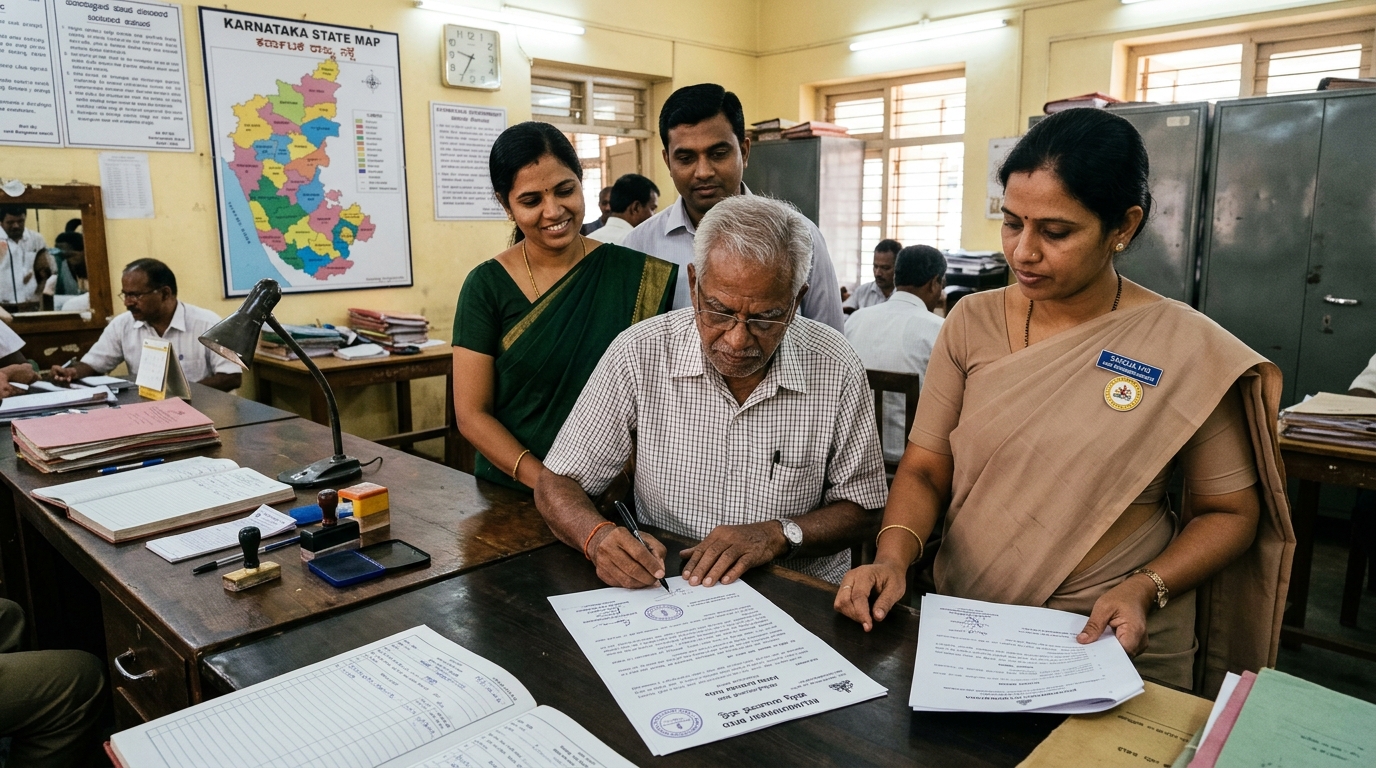
1. What is a Relinquishment Deed and what is its importance?
A Relinquishment Deed, commonly known as Hakku Khulase Patra in Shivamogga and across Karnataka, is a legal document used when a person gives up or surrenders their legal share in a joint or ancestral property to another co-owner or legal heir. Its main importance is that it clearly transfers property rights without any future legal confusion. It ensures that the person receiving the share becomes the absolute owner of that portion.
2. Why and when is a Relinquishment Deed needed?
This deed is needed when a property owner dies without leaving a will, leaving behind multiple legal heirs like brothers, sisters, and mother. If some heirs do not want their share and wish to transfer it to one person (for example, to the mother or one brother), a relinquishment deed is required. It helps consolidate property ownership, makes it easy to get bank loans, and simplifies revenue record updates.
3. What are the key contents of a Relinquishment Deed?
The document must clearly contain the personal details (name, age, address, and Aadhaar details) of both the Releasor (person giving up rights) and the Releasee (person receiving rights). It must include a detailed property schedule with survey number, Khata number, exact measurement, and boundary details. It must also state that the rights are surrendered voluntarily out of love and affection, without any force or coercion.
4. Should a Relinquishment Deed be registered?
Yes, registration is strictly compulsory under Section 17 of the Registration Act, 1908. The deed must be executed on proper stamp paper and registered at the local Sub-Registrar office where the property is located. An unregistered deed on plain paper or simple notary stamp has no legal value in court and will not be accepted for Khata transfer.
5. What is the legal importance of a registered Relinquishment Deed?
Once a Relinquishment Deed is registered, it becomes a permanent legal record that cannot be easily cancelled or taken back by the person who gave up the share. It provides clear legal title proof to the new owner, protecting them from future family disputes. Revenue authorities like City Corporation, BBMP, or Gram Panchayat require this registered deed to change the Khata completely into the new owner's name.
(For informational reference, Advocate Divakara S.V. practices at Renuka Complex, Durgigudi, Shivamogga.)